



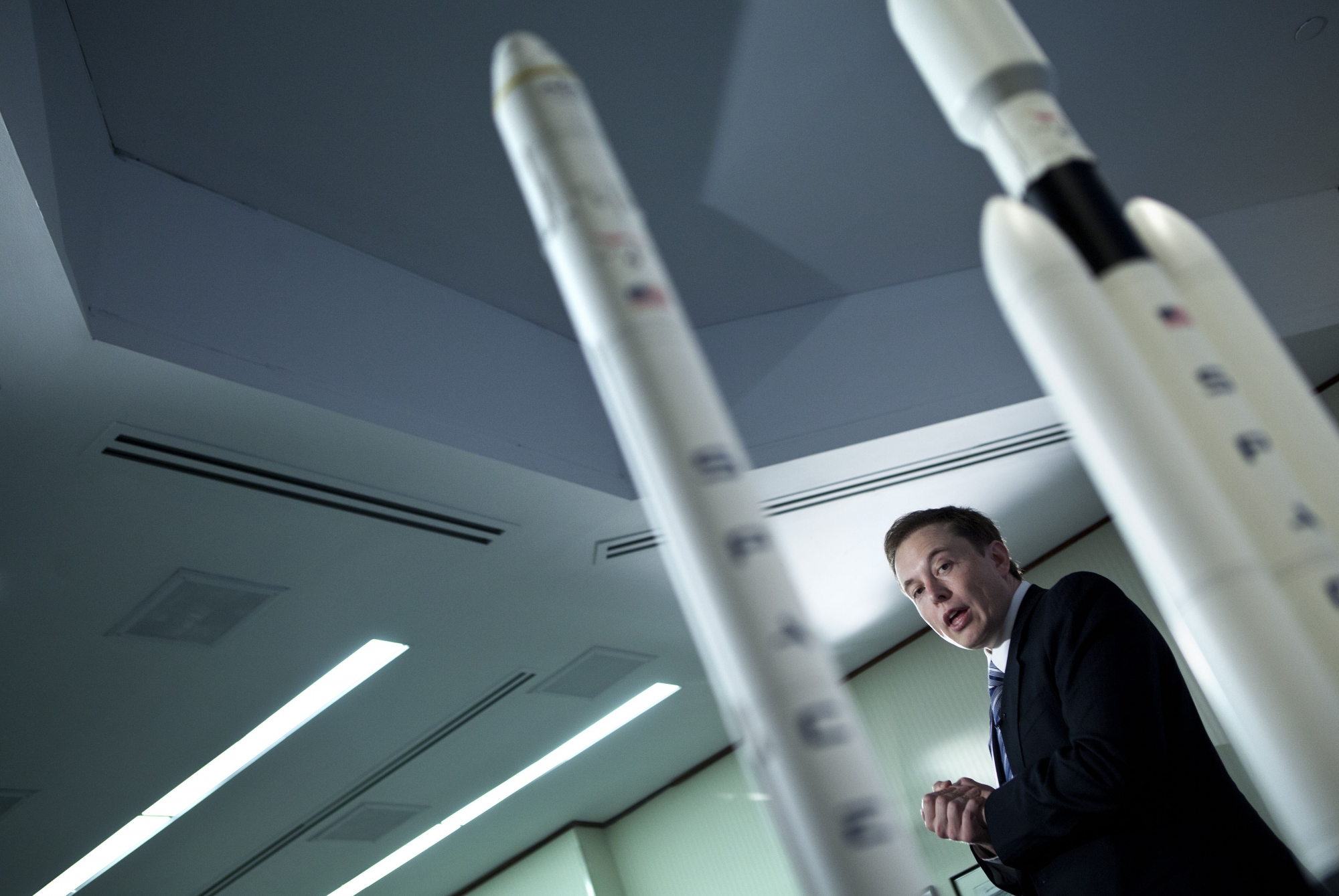
Elon Musk has successfully launched another Space X rocket into space, but failed to land this latest one on its target barge.
Tesla, Musk's company, launched the unmanned Falcon 9 at sunset on Friday. It carried a broadcasting satellite for SES, a company based in Luxembourg. This was Tesla's fifth launch for the past one and a half weeks. Another launch was tried on Sunday, but with the rocket engine shutting down a split second before it lifted off.
As Tesla attempted many times before, it tried to land the first-stage booster of Space X in a barge in the middle of the Atlantic about 400 miles offshore. But before it touched down and about 10 minutes into the flight, the TV camera aboard the platform conked out inducing loud groans from the crowd watching on the premises of the Hawthorne, California Tesla Headquarters.
It turned out that the leftover first-stage booster hit the floating barge hard, knocking of the TV camera and cutting off its live transmission. Tesla claimed that it never expected to have a successful landing since the booster has to have a faster speed so that the satellite it carried could be lifted up to a higher orbit.
Previously in December, Space X was able to complete a successful rocket landing on the Cape Canaveral grounds. However, the car electric company has yet to nail a more difficult barge landing at sea.
The booster also burned up more fuel in going up therefore it has less fuel when it tried for a precision touchdown. When it went up, the crowds cheered as it went higher than before, and more so when the camera showed the successful separation of the satellite it carried.
Elon Musk claimed that the rocket engine reached the target altitude of 40,600 kilometers or over 25,000 miles. "Thanks @SES Satellites for riding on Falcon 9! Looking forward to future missions," he tweeted afterwards.
Aviation Capital Group, the Newport Beach, California-based global aircraft asset manager, has signed a firm order for 75 additional Airbus A320neo Family aircraft, bringing its cumulative orders for...
Bombardier marked the 40th anniversary of its industry-leading Smart Services cost-per-flight-hour programs, which today support more than 1,500 enrolled aircraft and account for over 11 mil...
Few infrastructure projects have the potential to reshape an island's future quite like the ongoing transformation of Nevis Airport. To gain deeper insight into this ambitious development and the...
In business aviation, exceptional service is defined by attention to detail, and few amenities reflect that more clearly than premium catering. At the intersection of hospitality and private aviation,...

