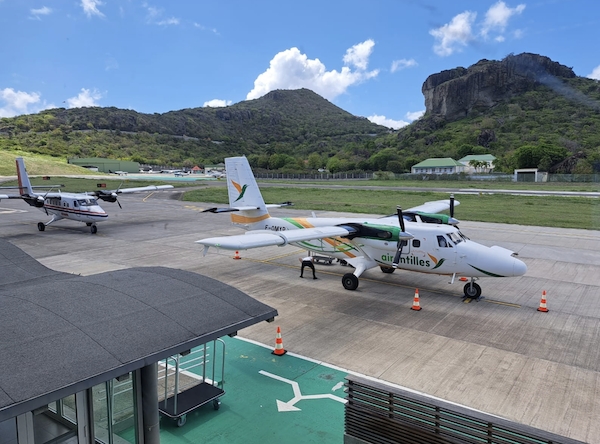
Air Antilles, re‑founded on 10 October 2023, launched operations in late June 2024, ceased flying on 8 December 2025, and is now expected to enter bankruptcy proceedings in early 2026. The airline survived 17 months of operations and 27 months as a corporate entity.
The airline’s failure was structural, not accidental. It was built on misaligned assumptions, insufficient capitalization, political over‑optimism, and a business model incompatible with the realities of Eastern Caribbean aviation.
No single actor “caused” the collapse. The failure was baked into the founding logic. Air Antilles did not fail because of just one bad decision or just one bad actor. It failed because it was reborn on assumptions that were never true. It was designed to survive good times, not bad ones. The Caribbean rarely gives one long stretches of good times. Decision-making must be professional, not political. Aviation decisions must be made by independent aviation and financial experts, not political cycles.
Forget about who is to blame. What was mis-assumed and mis-concepted when the founding was decided? That is right question, and it’s the one almost no one in the region ever articulates clearly: not “who failed,” but “what assumptions were baked into the rebirth of Air Antilles that were never realistic in the first place?”
Reality 1:
The Eastern Caribbean market is thin, seasonal, and price‑sensitive.
It cannot sustain multiple small carriers with high fixed costs.
This is the same trap LIAT (old), Air Antilles (old), Air Caraïbes Express, and others fell into.
Political Will was overestimated. The founders assumed:
Guadeloupe and Martinique would provide long‑term financial support.
The French state would step in if needed.
Regional governments would treat the airline as “strategic infrastructure.”
Reality 2:
Political support is cyclical, factional, and budget‑limited.
Once the initial enthusiasm faded, the airline was left exposed.
This is why airlines in this region repeatedly fail. A small airline cannot survive in the Eastern Caribbean without either scale or guaranteed subsidies. Air Antilles attempted to operate in the narrow space between those two realities. That space does not exist.
Thin markets cannot support high fixed costs. Future operators must either right‑size the fleet (smaller aircraft) or secure long‑term public service contracts.
Competition moves faster than governments. When Air Antilles collapsed the first time, competitors filled the gaps quickly. The new airline assumed it could reclaim those markets simply by returning. Market share lost during collapse is not “waiting” to be recovered. A new airline must be capitalized for 24–36 months of volatility, not 6–12.
Political Enthusiasm versus Sustainable Funding. The founding relied on political will rather than durable financial commitments. Once the political cycle shifted, the airline was exposed. If an airline is treated as essential infrastructure, it must receive infrastructure‑level funding, not ad‑hoc support.
There is an alarming ongoing trend at EBACE. There was a time that halls were filled wall to wall and several major aircraft manufactures had exhibits that looked like an estate with a palace on it. N...
When EBACE was cancelled, the total measurable, quantifiable economic impact is an estimated €23–42 million, plus the unquantified strategic losses. So now what? Let’s start with some numbers. EB...
Some national business aviation associations lead. Some follow. Most drift. BBGA – United Kingdom may be considered the most professionally run national association in Europe. BBGA behaves like a busi...
Today it was officially announced that Dudley Didges will be St.Tosia's new Minister of Civil and Other Aviation. The island doesn't have an airport, but it has vision, which is quite refreshing and c...
Eagles soar because they always focus on their goal. One will never become an eagle by thinking like a chicken. Having said that, there is no approval for conferences with grotesque show characteristi...