



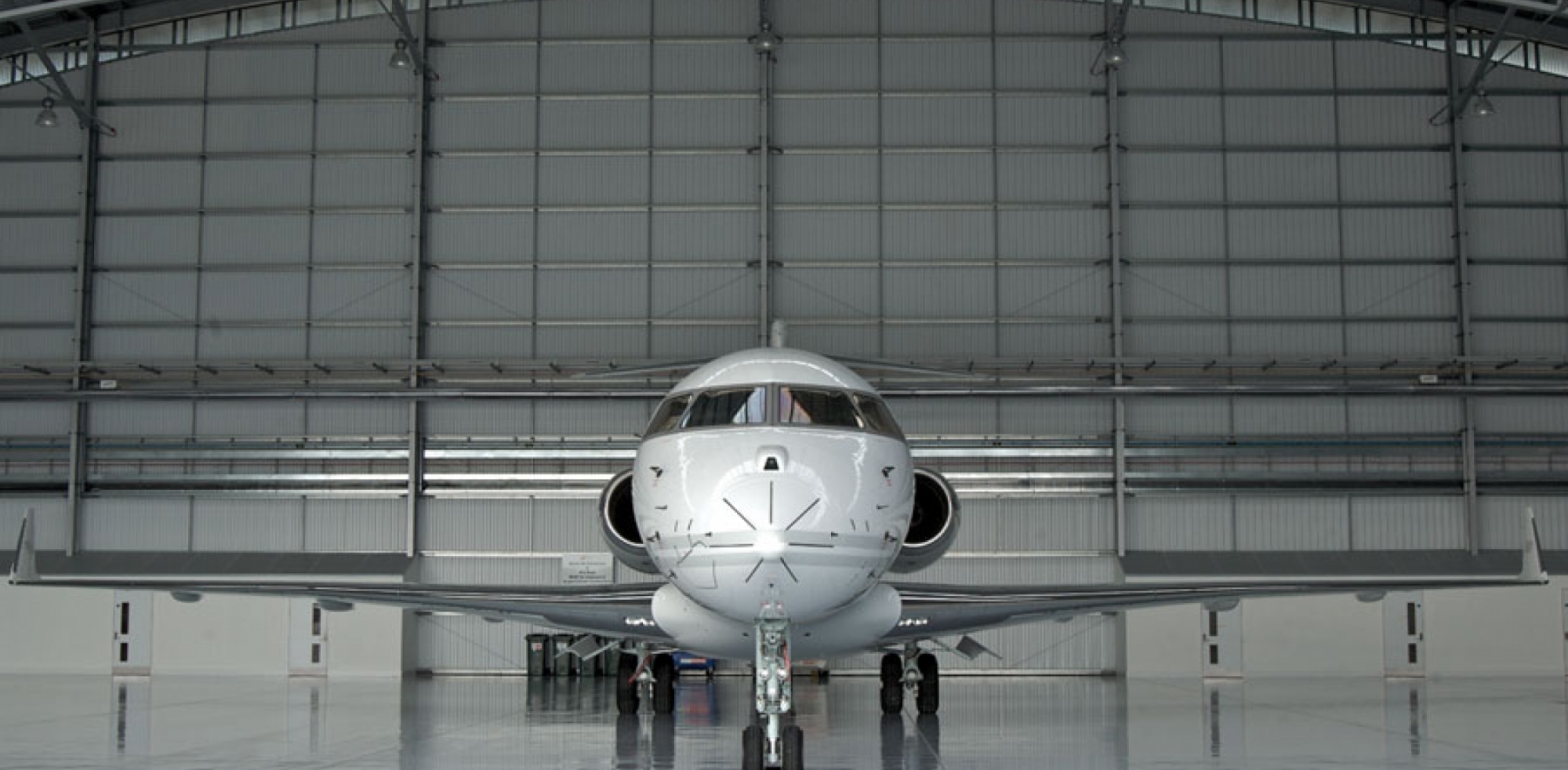
TAG Aviation (UK) has been granted approval to use less restrictive instrument approach minimums, in line with EASA regulations. The approvals only apply on aircraft fitted with HUD/EVS technology.
Enhanced vision systems (EVS) incorporate sensing technology to improve a pilot’s ability to detect objects – such as runway lights or terrain – that may otherwise not be visible. The image produced from the sensor and/or image processor can be displayed to the pilot in a number of ways including use of a HUD.
As part of the approvals process TAG Aviation developed a training programme, associated operational techniques and standard operating procedures in order to equip its crews with the skills and knowledge required to effectively operate these systems.
“The HUD/EVS approval and training permits crews to fly to an approach in visibility worse than the normal minimum, allowing a decent of 100′ above the runway in bad weather, rather than the usual 200′.”
Captain David Clarke, deputy chief pilot said: “The HUD/EVS approval and training permits crews to fly to an approach in visibility worse than the normal minimum, allowing a decent of 100′ above the runway in bad weather, rather than the usual 200′.”

Avolon, one of the world’s leading aviation finance companies, has reinforced its long-term growth strategy with a firm order for 110 Airbus aircraft, including 35 A330-900 widebodies and 75 A32...
In a landmark step towards next-generation regional aircraft manufacturing, Jungheinrich has delivered an advanced automated logistics centre to Deutsche Aircraft at Leipzig/Halle Airport. Supporting...
Etihad Airways has signed an interline agreement with Nigerian airline Ibom Air, enabling travellers to connect seamlessly beyond Lagos and Accra to five destinations across Nigeria on a single t...
TRU Simulation + Training Inc. will showcase its Veris Virtual Reality Flight Training Device (FTD) for the Cessna Skyhawk at NBAA-BACE 2026, marking the simulator's first appearance at the indust...

