To stress the difficulties PAM faces in the region, he offered an insight into a conversation he had with one director of civil aviation in a West African country about the fate of a patient.
“I said, ‘Sir, if this patient is not brought out he will die’ and the director responded, ‘If he dies, he dies’. So, as you can imagine, you’re lost for words and it’s hard to follow up a remark like that while trying to get across the importance of a quick and easy medical solution,” he said.
PAM does have a solution for the region, though, as Culligan explained: “Our concept is to have a PAM-African solution of the air ambulance closer to the patient, cutting down on times getting to the patient, which gives us that little extra window in which to negotiate.”
PAM has been working with Nairobi-based Amref Flying Doctors for the last 15 years; it is the largest and most well-known international air ambulance services provider in the region and has been operating there for 58 years.
With PAM aircraft they have been using the ability to travel in Africa, the Middle East, Asia and beyond.
“We need now to spread that more in Africa,” said Culligan. “As the provider of aeroplanes, we will work with somebody like Flying Doctors to make that leap.”
Culligan said the fleet depends on the location, so it could be a Caravan for short rough strips, a rotary-wing aircraft, or a Global Express 604.
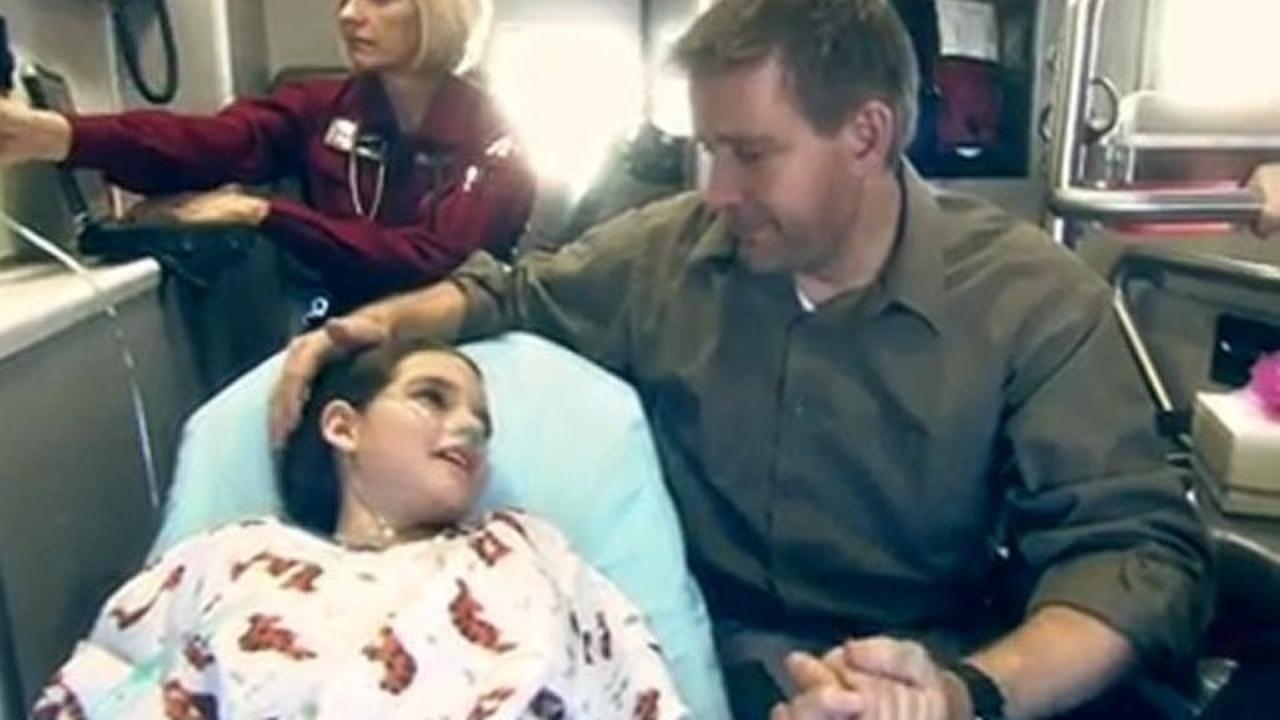
“The aircraft is really just a means of conveyance,” said Culligan. “The basic structure, essentially the box the patient lies on, will be inside the aircraft. The equipment will come from the medical provider with an intensive care unit (ICU) flight physician and an ICU flight nurse to provide the medical support, which is the essential part. The medical crew drive the process.”
The frustrations PAM face in Africa are constant as Culligan, who knows the region well after 20-years of aero-medical operations in East Africa, explained: “Africa is a huge continent, four-and-a-half times the size of America, and, unfortunately, some people think that Nigeria and Nairobi are the same place – so the size and vastness of Africa is something that doesn’t get across.
“Firstly, there is the government trying to understand the urgency and not quite grasping it. So we have a commercial type of operation, like British Airways for example, which comes in at 10am – the government understands that. You have a commercial charter operation where a businessman is coming in and the government will understand it might take two or three days for clearances. But, for medevac, where people might die if we don’t get there as quickly as possible, the government structure is set up in a way that they don’t accept that.”
He added: “Africa has political conflicts, civil wars, poor infrastructure, strife, a lack of assets, there are so many things in Africa that are unique. So, to have a PAM-African aero-medical solution with various locations that provide air ambulances that can link together will offer a better service to everybody, and that’s what we’re trying to do.”
Culligan pointed out that the European Aeromedical Institute, which is one the two organisations in the world that accredits air ambulance companies, sets an example.
“If everyone can reach that standard, then the client, the insurer the assistance companies, the hospital will know their patient is in good hands in that bed-to-bed service,” he said.
By attending AfBAA, Culligan hopes attention will be drawn to the problems medevac companies face in the region.
“This forum gives an opportunity, not only for business and commercial aviation operators who understand this, to come together as a body and work with the governments. You have ministers or their representatives here, so if they can take that message back from the 100 or so delegates here and say ‘we have a problem’, then that is a great start.”