

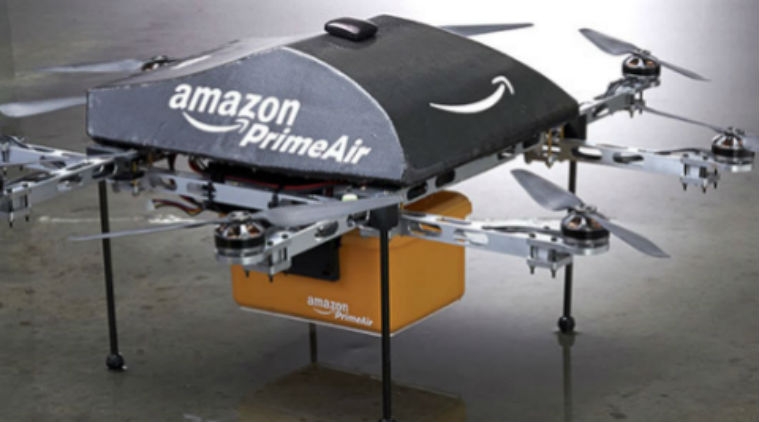
Internet giant Alphabet Inc, the new holding company for Google, expects to begin delivering packages to consumers via drones sometime in 2017, the executive in charge of its drone effort said on Monday.
David Vos, the leader for Alphabet's Project Wing, said his company is in talks with the Federal Aviation Administration and other stakeholders about setting up an air traffic control system for drones that would use cellular and Internet technology to coordinate unmanned aerial vehicle flights at altitudes under 500 feet (152 meters). "Our goal is to have commercial business up and running in 2017,|" he told an audience at an air traffic control convention near Washington.
Alphabet and Amazon.com Inc are among a growing number of companies that intend to make package delivery by drone a reality. But drone deliveries are not expected to take flight until after the FAA publishes final rules for commercial drone operations, which are expected early next year.
Two years after initial research began, Project Wing was announced in August 2014 with a YouTube video showing a field test of its most viable prototype in Australia. The prototype flown in Australia, 1.5 meters (4.9 feet) wide and 0.8 meters (2.6 feet) tall, shares the same four-propeller quad copter design as popular consumer drones, but the company said consumers can expect to see new vehicle types and shapes as the project unfolds.
Inside the United States, Project Wing has conducted testing with NASA. Vos, who is co-chair of an FAA task force charged with coming up with a drone registry, said a system for identifying drone operators and keeping UAV away from other aircraft could be set up within 12 months. "We're pretty much on a campaign here, working with the FAA, working with the small UAV community and the aviation community at large, to move things along," he said.
Vos said a drone registry, which the Obama administration hopes to set in place by Dec 20, would be a first step toward a system that could use wireless telecommunications and Internet technology including cellphone applications to identify drones and keep UAV clear of other aircraft and controlled airspace.
He said Google would like to see low altitude "Class G" airspace carved out for drones, saying it would keep UAV away from most manned aircraft aside from low-flying helicopters, while enabling drones to fly over highly populated areas.
Dassault will introduce the fourth-generation EASy IV flight deck on newly built Falcon 2000LXS aircraft, while also making the upgrade available as a retrofit across the entire Falcon 2000 EASy fleet...
AMAC Aerospace Group continues to experience strong business momentum, marked by new certifications, contract wins and rising demand across its maintenance, completion and aircraft modification activi...
Turkish Airlines has taken another major step in its fleet expansion strategy with the signing of a Memorandum of Understanding with CFM International for more than 300 LEAP-1B engines and a long-term...
Few infrastructure projects have the potential to reshape an island's future quite like the ongoing transformation of Nevis Airport. To gain deeper insight into this ambitious development and the...