



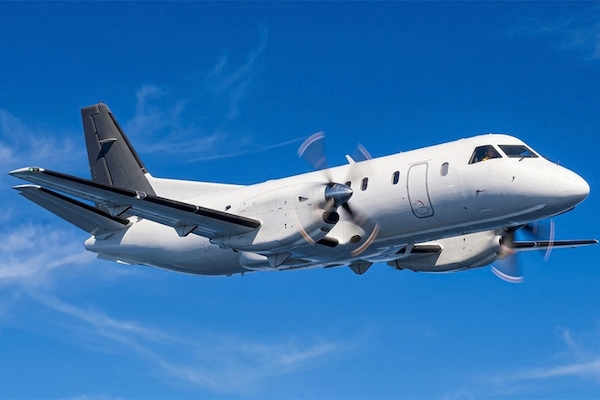
When a vehicle assembly line is at risk of running out of critical components, every minute of downtime carries a significant cost. In many cases, an emergency air charter is not the expensive option, but the most economical one. Consider a scenario in which a major automotive manufacturing facility in Germany faces an imminent parts shortage, while three pallets of urgently needed components remain stranded in Bulgaria. The cargo is too large for an onboard courier, and scheduled airfreight services cannot meet the required delivery window.
In response, a dedicated charter aircraft can transport the shipment directly to the production site within just eight hours of the initial request, helping the manufacturer avoid a costly interruption to operations. According to Isidro Nuñez Oñate, Senior Manager Cargo Charter DACH and Automotive Expert at Chapman Freeborn, this reality underpins many time-critical automotive logistics decisions: the true cost is rarely the charter flight itself, but the financial impact of a delayed delivery and a halted production line.
How a single missing component can bring an entire plant to a halt
Modern automotive manufacturing operates on just-in-time principles, leaving little margin for disruption. Assembly lines run according to tightly synchronized production schedules, meaning a delay at one stage can quickly ripple through the entire operation. According to Siemens’ True Cost of Downtime report, a single hour of downtime at a major automotive facility can cost as much as $2.3 million.
“Automotive production runs with extraordinary precision, so even a minor disruption can have major consequences,” says Nuñez Oñate. “If a shipment of parts destined for one production stage is delayed, or a batch of critical components fails quality checks, the entire assembly process can be affected. Once the line stops, costs continue to escalate with every hour production remains idle.”
Even the most sophisticated supply chains are not immune to unexpected disruptions. Urgent logistics requirements can stem from forecasting or procurement errors, quality-related replacements, supplier issues, or transport delays caused by traffic congestion, labour strikes, or adverse weather conditions.
These scenarios occur across Europe’s leading automotive manufacturing and supplier markets, from Germany and the UK to Italy and Poland. While the circumstances may vary, the challenge is often the same: a production facility requires specific components within a fixed timeframe, and conventional road transport or scheduled airfreight services can no longer meet the deadline. In such cases, dedicated air charter solutions become a critical safeguard against costly production interruptions.
When every minute matters
While some manufacturers can anticipate a shortage two or three days in advance, many requests arrive with only hours to spare. In some cases, the call comes on the very day the production line is expected to stop.
Once a request is received, every available transport option is evaluated, including next flight out (NFO), onboard courier (OBC), scheduled airfreight, dedicated trucking and full aircraft charter. The objective is always the same: find the most cost-effective solution capable of meeting the production deadline.
“If the shipment is too large for an onboard courier and scheduled services cannot meet the required timing, a dedicated charter often becomes the only viable option,” says Nuñez Oñate.
The high cost of downtime
“For manufacturers, the decision comes down to comparing the cost of a charter against the financial impact of a production stoppage,” explains Nuñez Oñate. “If an aircraft can deliver the required components in time to keep the assembly line running, transportation costs quickly become a secondary consideration.”
In the Bulgarian example, the pallets were collected directly from the supplier and transported to Sofia Airport. A dedicated aircraft then moved the shipment to a regional airport close to the German manufacturing facility, where final delivery was coordinated directly to the plant, ensuring production could continue uninterrupted.
Managing the complexity of EV components
While the rise of electric vehicles has not changed the urgency of time-critical automotive shipments, it has introduced additional operational considerations for certain cargo types.
“From a logistics perspective, EV production has not fundamentally altered the need for speed,” says Nuñez Oñate. “However, certain components, particularly those subject to dangerous goods regulations, require additional handling and compliance measures that must be managed even under the tightest deadlines.”
When supply chains face unexpected disruption
Automotive supply chains can come under pressure with little warning. Labour strikes, severe weather, road closures and ferry disruptions can quickly interrupt established logistics flows and create urgent transportation requirements.
Nuñez Oñate highlights North Africa as an increasingly important part of the European automotive ecosystem. Morocco and Tunisia are well-established supplier hubs, while automotive manufacturing activity continues to expand in Algeria. These supply chains rely heavily on road transport and ferry connections into Europe.
“When ferry operations are disrupted by adverse weather, industrial action or other operational issues, recovering lost time through road transport alone is often impossible,” he explains. “We have seen Mediterranean weather events significantly disrupt ferry schedules, leaving conventional freight services unable to meet production deadlines. In these situations, urgent airfreight and charter solutions become essential to keep assembly lines operating.”
Why emergency charters remain a reactive business
Despite advances in forecasting and supply chain visibility, most emergency charter requests continue to be driven by unforeseen events rather than long-term planning.
“From our experience, the majority of urgent requests remain reactive,” says Nuñez Oñate. “In a global supply chain, disruptions can originate with a supplier thousands of kilometres away and be impossible to predict. What manufacturers can control is the speed of their response and the range of transport solutions available when issues arise.”
The shipments involved may often be relatively small, but the consequences of delay are not. When conventional transport options can no longer protect a critical production schedule, the value of a charter aircraft is measured not by its cost, but by its ability to prevent a far more expensive production shutdown.
Gogo has secured a communications lease valued at more than $15 million with a sovereign government customer, reinforcing its position as a trusted provider of mission-critical airborne connectiv...
Airbus Helicopters Canada has partnered with the Saskatchewan Indian Institute of Technologies (SIIT) to strengthen Indigenous participation in the aerospace sector through enhanced training and workf...
Bombardier has expanded its customer support capabilities in the Asia-Pacific region with the launch of a new Line Maintenance Station in Sydney, Australia. The facility enhances operational convenien...
Avolon, one of the world’s leading aviation finance companies, has reinforced its long-term growth strategy with a firm order for 110 Airbus aircraft, including 35 A330-900 widebodies and 75 A32...

