



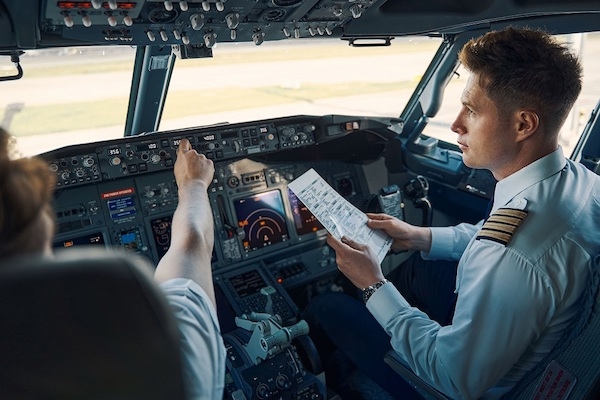
The role of an airline captain has long been esteemed and sought after. However, a recent trend highlighted by the American Airlines pilots' union reveals a surprising statistic: over 7,000 pilots at American Airlines have opted out of pursuing captain positions, while United struggled to fill 50% of the 978 captain vacancies in the past year. This prompts the question: what factors have led to this shift?
Possible loss of seniority and unsatisfactory work-life balance
According to Jainita Hogervorst, Director of Aerviva Aviation Consultancy, there are many reasons reducing the allure of becoming a head of flight crew. “While becoming a captain entices with attractive compensation possibilities as well as a prestigious title, it also involves a change in seniority dynamics, specifically the transition from senior first officers to junior captains. Junior captains are faced with amplified uncertainties in their flight schedules, on-call commitments, and sudden assignments, translating to reduced stability. Such uncertainty in scheduling might trickle down to other issues, such as unsatisfactory work-life balance. The evolving work-life balance landscape and societal attitudes towards career encourage a shift in working people's attitude, pilots included. According to Statista, 72% of individuals surveyed consider work-life balance a pivotal factor in job selection, underscoring its growing significance “
Furthermore, United pilots have disclosed that many senior first officers opt to forego promotions to junior captain positions, fearing the loss of seniority and subsequent disruption to their personal lives. Work regulations can compel pilots to accept assignments during their days off, with flight plans subject to arbitrary changes or extensions. Seniority has traditionally afforded pilots a measure of schedule predictability, facilitating trip selection, trading, and vacation planning. However, adjustments in job roles, airline bases, or aircraft types can influence seniority rankings.
What does it mean to airlines?
The International Air Transport Association's most recent data reveals an increase in air traffic, with May 2023 witnessing a 39.1% increase in revenue passenger kilometres compared to the previous year. Globally, traffic has surged to 96.1% of the pre-pandemic levels of May 2019.
“Such rapid recovery is met with one of the most pressing challenges of the aviation industry — pilot shortage,” says Hogervorst. “Projections from the International Civil Aviation Organization suggest a need for over 350,000 pilots by 2026 to sustain operations and the scarcity of captains further exacerbates the challenge. Some regional carriers have already curtailed flight schedules by up to 20% due to pilot staffing constraints, highlighting the critical role captains play. This intensifies pressure on existing captains and diminishes the allure of the position.”
A possibility for aspiring driven pilots
While unfortunate, this global situation opens new doors to aspiring young pilots aiming for captaincy. Reports from Aero Crew News reveal a new trend: pilots with as little as 4.5 months of seniority bid to become captains on aircraft such as Delta's Boeing 757 or Boeing 767, marking a departure from industry norms.
Bringing captaincy back to the top
The potential for reinvigorating the captain role lies in shifting the focus towards work-life balance. Jainita Hogervorst continued: “The decreasing dominance of pay as the sole motivator presents an opportunity to enhance the position's allure. Recently, while renegotiating their contract, the pilot union at United has outlined 79 quality-of-life enhancements, including measures to prevent pilots from being compelled to accept assignments on their days off and introducing incentives and improved scheduling systems for last-minute engagements. By focusing more on improving captains’ work-life balance and mental health, airlines can not only reinvigorate the captain role but also fortify its appeal to the pilots of today and tomorrow.”
Few infrastructure projects have the potential to reshape an island's future quite like the ongoing transformation of Nevis Airport. To gain deeper insight into this ambitious development and the...
Embraer has delivered the first E175 fitted with next-generation RECARO passenger seats to American Airlines, marking another step in the ongoing modernization of one of the world's most successfu...
Private jet catering requires an understanding of the journey as much as the passengers' preferences. SkyDine Jet Catering explores how flight duration, departure schedules, airport location, and...
In business aviation, exceptional service is defined by attention to detail, and few amenities reflect that more clearly than premium catering. At the intersection of hospitality and private aviation,...

