



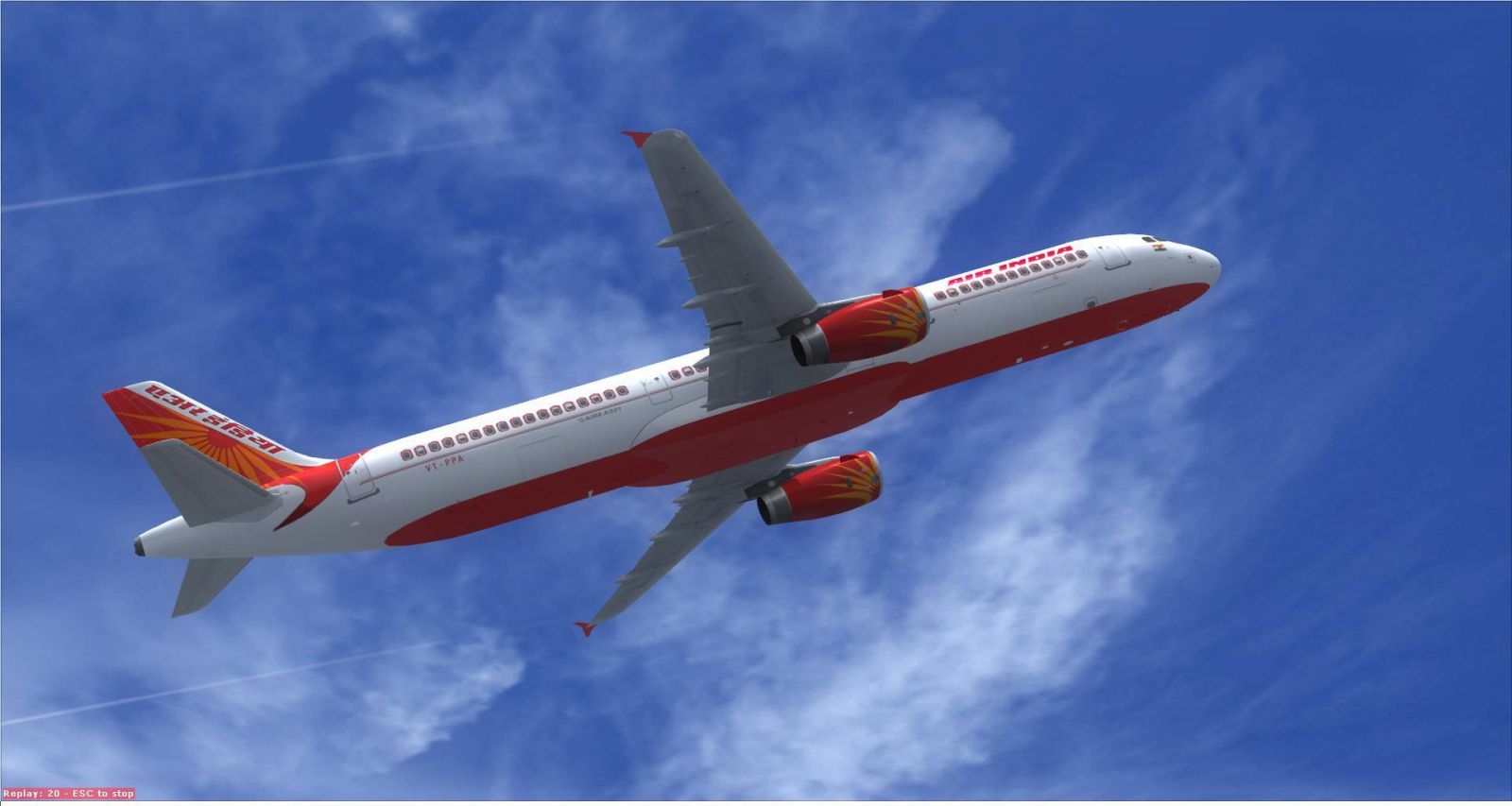
The Indian aviation sector, the tenth largest in the world, is looking even more curious. About 70 million domestic tickets are estimated to be sold in 2014-15 and the Centre has an ambitious aim to enable 300 million domestic ticketing by 2022 and 500 million by 2027; similarly, international ticketing is expected to touch 200 million by 2027. In contrast, our neighbouring giant, China, added 100 million tickets in 2014 alone.
So, what is ailing the local aviation sector?
Lack of infrastructure
Transport systems (rail, road or waterways) require public investment and support to deliver competitive passenger fares and services. Howsoever efficient the carriers maybe, the enabling infrastructure needs state support to build and sustain.
India traditionally moves on rail, with nearly 8,400 million passengers clocking 1,158 billion passenger km in 2014--far more than China and Japan combined. The credit for this goes back to the colonial times when this sector had a separate Budget.
The absence of sustained and continuing government support for building infrastructure similar to Railway is the first challenge. Where will the money for this come from? Certainly not from overseas investors.
The industry grumbles that it is over-regulated, over-controlled and over-taxed. Notable are taxes levied on air turbine fuel (ATF). The fuel costs of Indian carriers account for 40 to 50 per cent of the total cost of the air carriers, compared with 20-30 per cent in other parts of world. This hurts competitiveness. The civil aviation policy, the ‘5/20 rule’, requires Indian carriers to fly for a minimum of five years and have a fleet of 20 aircraft before they can operate overseas routes. This raises another question — if neighbouring nations can encourage their entrepreneurs to create low-cost regional airlines such as Air Asia and Silk Air, why can’t India also help create such airlines?
The recent draft of National Civil Aviation Policy (NCAP 2015), released by the Directorate General of Civil Aviation for public and stakeholders on October 1, 2015, admits that the sector has not witnessed desired growth. The draft policy proposes a few bold features. One, roll out of Regional Connectivity Scheme from April 1, 2016 with cap of air fare to ₹2,500 per passenger (indexed to inflation) for one-hour flights. No airport charges and service tax are to be levied for operations under regional connectivity scheme (RCS), with state utilities such as power, water, police and other utilities to be provided free of cost. New airline category has been proposed for enhanced regional connectivity.
Two, there is a proposal to levy 2 per cent cess on tickets for popular domestic routes for funding any viability gap. Three, there are plans to revive non-operational air strips and airports, including no-frills airports, at a cost of ₹500 million. Four, there are also a number of incentives proposed for maintenance, repair and overhaul (MRO), including waiver of service tax, exempting tools and tool kits from customs duty. There is however no clarity on the 5/20 norms. There are plans to offer domestic flying credits to commence international operations.
Lingering issues
The draft NACP 2015 has proposed measures for improving domestic air connectivity and serious intent for change and meaningful outcomes. Curiously, the draft NCAP 2015 has not given adequate prominence to some of the critical competitiveness issues faced by carriers. These relate to VAT on ATF, service tax on fares, airports charges and withholding tax on aircraft leases; some measures have however been proposed under RCS and for the MRO sector.
Gulfstream Aerospace has enhanced the capabilities of its Customer Support Performance Analytics program, further strengthening its ability to transform aircraft data into actionable insight...
AMAC Aerospace Group continues to experience strong business momentum, marked by new certifications, contract wins and rising demand across its maintenance, completion and aircraft modification activi...
Dassault will introduce the fourth-generation EASy IV flight deck on newly built Falcon 2000LXS aircraft, while also making the upgrade available as a retrofit across the entire Falcon 2000 EASy fleet...
A Discover Airlines Airbus A330 has become the first Airbus aircraft worldwide to enter regular commercial service after undergoing a full-scale AeroSHARK retrofit, marking a signi...

