




Increased comfort, time-saving and safety for business aviation pilots.
Geneva Airpark, the «5* residence for business jets», is continuing to invest in new equipment which not only means increased comfort and safety, but also saves time.
Since August 2018, the large 10’000 sq meters Geneva Airpark hangar has been equipped with a dual GNSS system, designed by Bristish company FalTech, known for developing extremely reliable solutions for land, sea and air use.
Geneva Airpark has selected a GNSS equipment compatible with GPS L1: 1575 Mhz, Glonass (Russia) and Galiléo (Europe) sytems. These devices eliminate glare and may be immediately aligned.
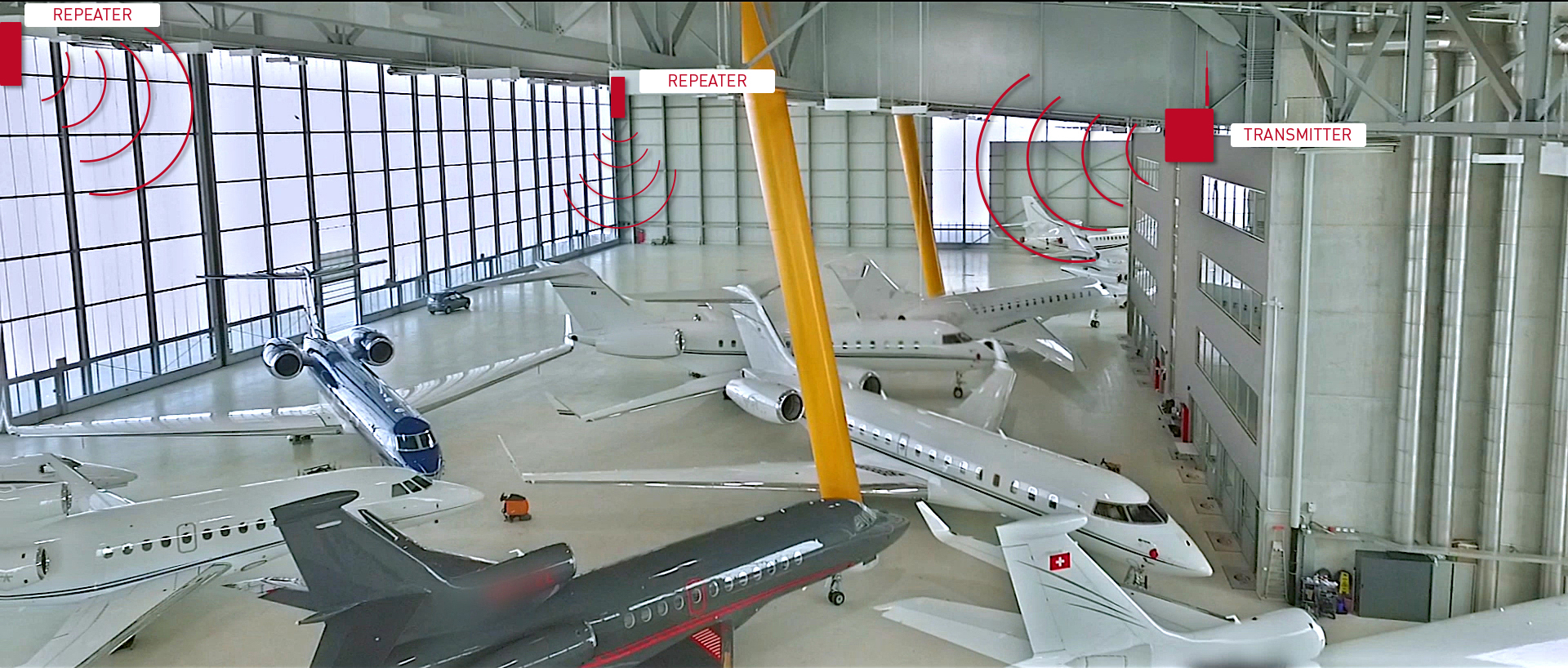
With its dual installation, Geneva Airpark ensures that all of its vast hangar, equipped to house even the biggest business aviation aircraft, is covered. Navigation equipment verification and testing may be safely and comfortably carried out indoor, meaning that pilots also save precious time.
Quality Observatory
Meeting this type of emerging requirement is precisely why Geneva Airpark put its quality observatory into place earlier this year. On the one hand, it enables them to monitor the level of customer satisfaction and on the other, it helps the team to remain informed when it comes to innovation and expanding the service offered.
With this new service, Geneva Airpark reaffirms its commitment to ensuring maximum safety for all its operations.


TARMAC Aerosave has set a new industry benchmark by becoming the first company in the world to secure Aircraft Fleet Recycling Association (AFRA) accreditation across all three scopes of aircraft disa...
Embraer has delivered the first E175 fitted with next-generation RECARO passenger seats to American Airlines, marking another step in the ongoing modernization of one of the world's most successfu...
Daher Aircraft will present its TBM and Kodiak aircraft families at next week’s NBAA Business Aviation Convention & Exhibition (NBAA-BACE), showcasing how their combination of performance, e...
Bristow Group Inc., in partnership with Electra, Avinor and the Norwegian Civil Aviation Authority (CAA Norway), will undertake a series of demonstration flights across five locations in Norway using...

