



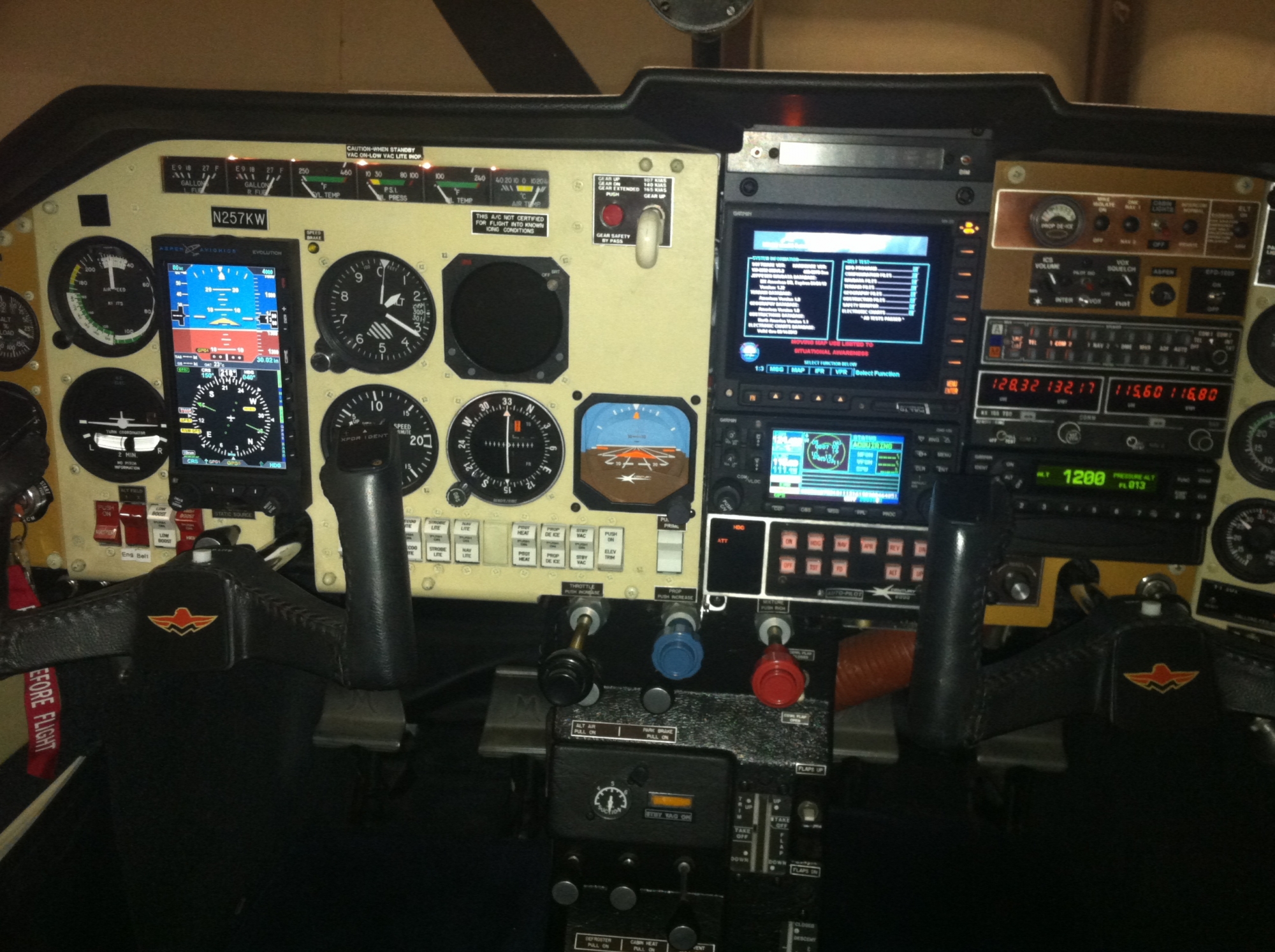
In a new policy statement, the FAA announced that electronically driven attitude indicators can directly replace vacuum-driven attitude indicators in aircraft flown under VFR and IFR. The installation can be done as a minor alteration.
Under a strict interpretation of the applicable regulations, the previous policy sometimes required installation of an independent standby attitude instrument as a backup for electronic flight instrument systems, or a vacuum system with vacuum-driven instruments to act as backups. Under the new policy, the FAA is allowing direct replacement of vacuum-driven attitude indicators with electronically driven attitude indicators because the electronic type is far more reliable.
According to the FAA, “The FAA’s Safer Skies initiative from 2001 identified vacuum system failures as a significant cause of or contributor to fatal accidents in instrument meteorological conditions (IMC). The study showed vacuum systems have a high failure rate and the failures tend to be insidious because [the devices] degrade slowly, making the potential for failure difficult to recognize. Additionally, data indicates that pilots may not have the proficiency to recover and land the airplane, in spite of instrument-rated pilots receiving partial-panel training.”
The FAA added that mean time between failure of vacuum-driven attitude indicators “is only a few hundred hours.” And vacuum pumps can fail after as little as 500 hours. “Electronically driven attitude indicators eliminate this type of failure. In addition, they provide more precise attitude indication, greater internal error-checking ability and internal redundancy, improving functionality over vacuum-driven attitude systems.”
To install the new electronic attitude indicator, some conditions must be met. These include the need for a backup and independent standby battery to power the new indicator; the new indicator must fit into the same location as the indicator it is replacing and be set to indicate level flight; only minor changes to the electrical system and vacuum connections required; and the new instrument must be powered from a new dedicated circuit breaker.


BPE Air, the aviation company founded and wholly owned by entrepreneur Aldrew Crowe, reported approximately US$90 million in revenue in 2025, marking a major milestone in the growth of its integrated...
Gogo has unveiled its long-term vision for the Galileo connectivity platform at NBAA-BACE 2026, outlining a roadmap designed to enhance and protect customer investments well into the mid-2030s and bey...
Viasat has significantly expanded the capacity of its JetXP in-flight connectivity service across the United States, delivering up to five times more bandwidth for business aviation customers equipped...
Dassault will introduce the fourth-generation EASy IV flight deck on newly built Falcon 2000LXS aircraft, while also making the upgrade available as a retrofit across the entire Falcon 2000 EASy fleet...

