


The United States is facing increasing power outages, surges, and spikes problem, which costs around $150 billion annually. There is an effort to make the power grid more reliable, but the numbers reveal that the problem keeps rising. Over 3,800 outages were reported in 2016 alone, which marked a 9% upsurge in comparison to the previous year. Smart data-driven solutions can help to save up to 50% of costs and make power line maintenance more efficient.
Power grid system in many parts of the United States is based by the same lines for roughly 150 years. Currently, the most urgent attention is paid to the transmission build in the 1950s and 60s. But European practice shows that it is not always the oldest lines that need the most urgent attention.
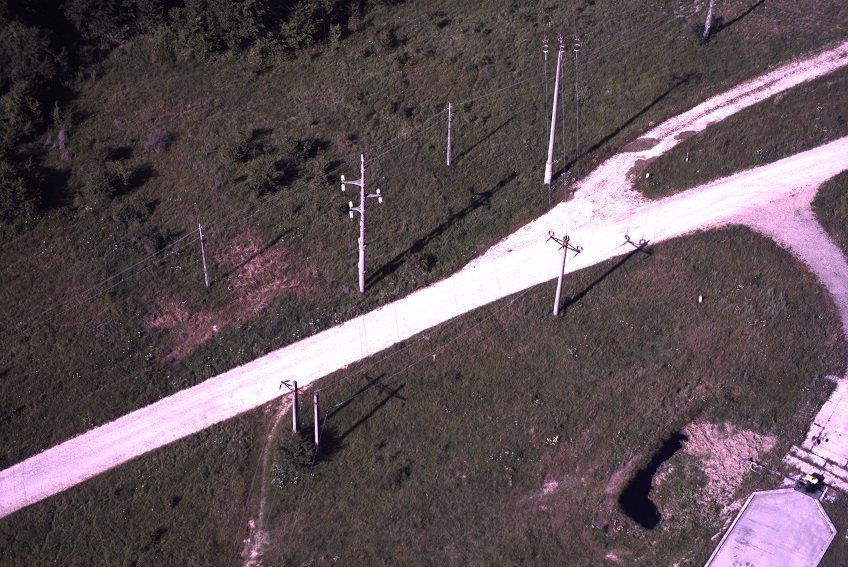
Recently, Laserpas, a helicopter and drone operator, specializing solely in the field of power grid inspection, has conducted a large-scale project in Romania (Europe), where company experts examined over 187 miles of power lines. The inspection detected over 1200 dangerous buildings, 1325 trees which pose severe danger to nearby power lines, 152 bodies of water underlying power lines, almost 2000 towers (out of 5175) covered in rust and as many as 280 broken insulators. But most importantly, the inspection has revealed that despite the common misconception, the oldest power lines are not necessarily the ones suffering from the greatest damage and thus posing the biggest threat to power line safety.
“Our findings have once and for all dismantled the myth that the oldest lines are the ones that could potentially cause the most trouble to utility companies. In fact, the results show that the so called time-based inspection approach is practically useless when it comes to responsible power line maintenance,” says Mantas Vaskela, CEO of Laserpas.
It is commonly believed that distribution towers and poles can be utilized for 25-30 years before showing the first signs of corrosion. Laserpas inspection showed a different picture. Half mile of a distribution line, which was built in 1955, had approximately 1 broken insulator and 5 towers affected by corrosion. The same span of a line built in 1985 also had one broken insulator, but more corrosion problems – 8 towers had rust. The findings lead to believe that the age of a distribution tower does not directly correlate either with the number of broken insulators, or corrosion. “This comes to show that data-driven inspection schedule as opposed to time-based maintenance approach is the cost-saving recipe that should be followed by all utility companies seeking to optimize their costs. There are various factors which are way more important than the age of a particular power line. These include tower configurations, asset condition, etc.,” explains M. Vaskela.
The highly advanced technologies such as scanning with nadir and oblique cameras are used in order to implement aerial surveillance as part of a three-stage process to collect, process and report the data. Systematic inspections of power assets help to prevent failures, accidents and interruptions. Laserpas is an innovative company which offers solutions for data driven decision making at 20-50% lesser costs than time consuming and labor intensive typical on-ground inspections.
Qantas Freight and Australia Post have entered the next chapter of their long-standing partnership with the arrival of the first of three additional Airbus A321 Passenger-to-Freighter (A321P2F) aircra...
Dassault will introduce the fourth-generation EASy IV flight deck on newly built Falcon 2000LXS aircraft, while also making the upgrade available as a retrofit across the entire Falcon 2000 EASy fleet...
A Discover Airlines Airbus A330 has become the first Airbus aircraft worldwide to enter regular commercial service after undergoing a full-scale AeroSHARK retrofit, marking a signi...
Textron Aviation has marked a key milestone in the development of the Cessna Citation CJ4 Gen3 with the rollout of the program’s first production aircraft. The achievement brings the next-g...