



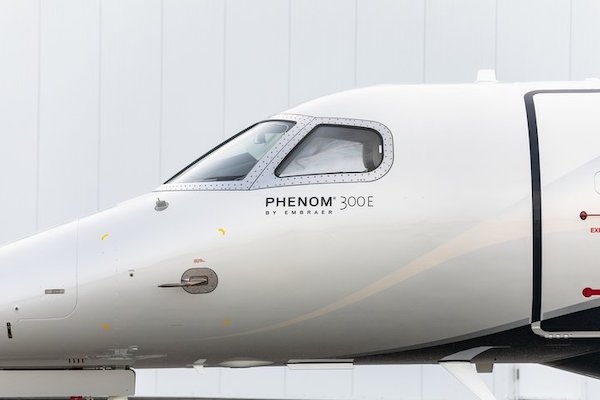
Embraer announced a revision to the Scheduled Maintenance Requirements (SMR) for the Phenom family of jets. The revision extends the intervals between stops from 600 flight hours and/or 12 months and multiples to 800 flight hours or 12 months and multiples. Most of the tasks with double intervals were also optimized to the longest period. This is a 33% maintenance interval improvement, which is almost double the industry average. To Phenom series customers, this significant improvement equates to less downtime, lower maintenance costs, a long economic life, and more time in the air. The improvement was only made possible by the performance of the Phenom fleet over the last decade. More than one year of engineering analysis confirmed that the customers of these aircraft can fully benefit from the high availability of the fleet for their even better convenience and greater flexibility.
“Conceived as clean-sheet designs to be the best in their respective classes, the Phenom 100 and 300 series aircraft were built for high utilization. Now, eleven years after the first delivery, with a fleet of over 900 jets in operation, our customer support and engineering team can reaffirm, once again, that our products are even better than the initial specification,” said Johann C. Bordais, President & CEO, Embraer Services & Support.
The Phenom fleet has accumulated more than 1.7 million flight hours and 1.4 million cycles since the first delivery of the Phenom 100 in December 2008. Embraer’s business jet operators are supported by a proven global services and support organization and its award-winning network of more than 70 owned and authorized service centers, complemented by a 24/7 Contact Center at its headquarters in Brazil.
The Scheduled Maintenance Requirements for the Phenom jets were developed to meet the specific needs of business aviation and are based on the Maintenance Steering Group (MSG-3) methodology. The methodology aims to preserve and restore the inherent safety and reliability levels of the aircraft and to build a knowledge base for design and maintenance improvement. The main benefits of this methodology include higher aircraft availability and overall cost reduction to keep the aircraft in ideal operating conditions.



Textron Aviation has marked a key milestone in the development of the Cessna Citation CJ4 Gen3 with the rollout of the program’s first production aircraft. The achievement brings the next-g...
Embraer has delivered the first E175 fitted with next-generation RECARO passenger seats to American Airlines, marking another step in the ongoing modernization of one of the world's most successfu...
Bombardier marked the 40th anniversary of its industry-leading Smart Services cost-per-flight-hour programs, which today support more than 1,500 enrolled aircraft and account for over 11 mil...
Archer Aviation all-electric Midnight air taxi successfully completed several days of piloted flights across the San Francisco Bay Area as part of the company’s “No Roads” flight tou...

