



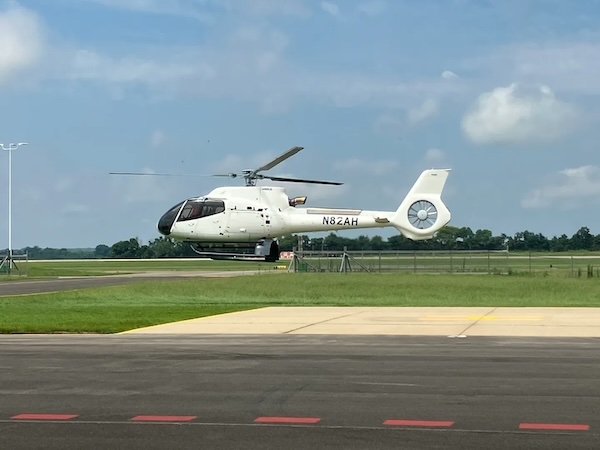
H130 helicopter marks a significant milestone with the integration of a new autopilot system. This technological innovation redefines the flight experience, offering a multitude of benefits for both pilots and operators.
Enhancing safety throughout the flight experience
Safety was the paramount concern for both Garmin and Airbus Helicopters when developing this new autopilot. This system provides significant assistance in all phases of flight, from cruise to delicate manoeuvres such as takeoff, landing and hovering, thanks to its three-axis stabilisation capabilities.
Jerome Ronssin, Head of Light Helicopters Programme at Airbus Helicopters said: “This innovative autopilot pushes back the limits of the H130's operational capabilities, offering advanced stability and precise control for safer, more efficient and more productive missions.”
To protect the flight envelope, the system integrates advanced safety features by applying progressive resistance to the cyclic stick as the helicopter approaches pre-defined limits, thus preventing dangerous manoeuvres. In addition, it also provides both visual and audible alerts if the aircraft exceeds predefined speed or altitude limits. A LEVEL button is also integrated, allowing the helicopter to return to a straight and level stable flight position in the event of pilot disorientation.

Impressing experts
Pilots who have tested the autopilot have highlighted its seamless integration into the cockpit. They particularly appreciate the yaw stability capability, the precision of the display, the various modes, and controls available.
Marc Prunel, an Airbus Helicopters test pilot who flew the H130 with the new Garmin autopilot commented: “We strongly believe in the new Garmin autopilot, and it shows great promise. The fact that it is now available on the H130, in addition to the H125, reduces workload, increases the aircraft’s stability, and provides significant safety benefits. For example, we can release the controls to check documentation or our iPad in flight. The autopilot is especially reassuring in cases of spatial disorientation or inadvertent entry into Instrument Meteorological Conditions (IMC), allowing for a safe turnaround. This greatly enhances flight safety, both day and night.”

Versatility and efficiency
Designed to accommodate a wide range of operations and engineered to enhance flight precision and efficiency, the H130 3-axis autopilot is now available to order as an option. This autopilot is an asset for many of the missions the H130 carries out on a daily basis, from emergency medical operations to private and business transport. While test flights are already well under way, certification is planned for the first half of 2025, with the initial deliveries to take place before the end of next year.

Qantas Freight and Australia Post have entered the next chapter of their long-standing partnership with the arrival of the first of three additional Airbus A321 Passenger-to-Freighter (A321P2F) aircra...
Viasat has significantly expanded the capacity of its JetXP in-flight connectivity service across the United States, delivering up to five times more bandwidth for business aviation customers equipped...
Dassault will introduce the fourth-generation EASy IV flight deck on newly built Falcon 2000LXS aircraft, while also making the upgrade available as a retrofit across the entire Falcon 2000 EASy fleet...
Velocity Maintenance Solutions, an FAA-certified provider of maintenance, repair and overhaul services, has announced a significant expansion of its facilities at Wilmington Airport (ILG) in Delaware,...

