



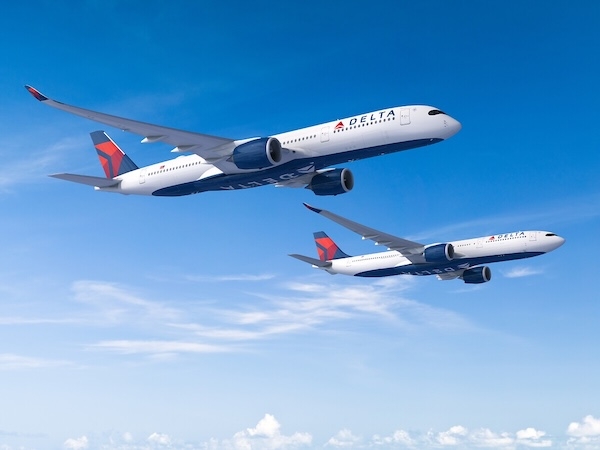
Delta Air Lines has placed a firm order for 31 latest generation aircraft including 16 A330-900s and 15 A350-900s. Once delivered, Delta’s widebody fleet will have grown to 55 A330neo and 79 A350s. Delta Air Lines currently operates more than 500 Airbus aircraft from all of the Airbus product families from the A220 to the A350-900. Delta Air Lines’ current Airbus backlog is around 200 aircraft and includes the A350-1000 aircraft.
Ed Bastian, Chief Executive Officer commented: “As we grow our international footprint and prepare our fleet to serve expanded long-haul markets, these aircraft will enhance our capabilities and elevate our premium offerings. We value our long-standing partnership with Airbus, and with these widebody aircraft we will see additional operational efficiencies and long-term cost benefits in the years to come.”
Benoît de Saint-Exupéry, Airbus EVP Sales of the Commercial Aircraft business stated: “Delta’s renewed confidence in both the A330neo and the A350 is a testament to our enduring partnership and the excellence of the Airbus widebody family performance. These aircraft offer the range, capacity, and premium cabin experience Delta requires to grow into new markets and connect more of the world.”
Powered by the latest generation Rolls-Royce Trent 7000 engines, the A330neo is designed to fly up to 8,100 nautical miles / 15,000 kilometers non-stop and reduces fuel burn, CO2 emissions and operating cost by 25% compared to previous generation competitor aircraft. A350 is the world’s most modern widebody aircraft, designed to fly up to 9,700 nautical miles / 18,000 kilometres non-stop, setting new standards for intercontinental travel. The aircraft includes state-of-the-art technologies and aerodynamics delivering unmatched standards of efficiency and comfort. Its latest generation Rolls-Royce engines and use of lightweight materials bring a 25 per cent advantage in fuel burn, operating costs and carbon dioxide (CO₂) emissions, compared to previous generation competitor aircraft.
The A330neo and A350’s unique Airspace cabin offers passengers and crews the latest modern in-flight products for a comfortable flying experience.
As with all Airbus aircraft, the A330neo and the A350 are able to operate with up to 50% Sustainable Aviation Fuel. Airbus is targeting to have its aircraft up to 100% SAF capable by 2030. At the end of December 2025, the A350 Family had won over 1,500 orders from 67 customers and the A330 Family had won over 1,900 orders worldwide.
The U.S. Federal Aviation Administration has certified the Boeing 737-10, the newest and largest member of the 737 MAX family, paving the way for Boeing [NYSE: BA] to begin customer deliveri...
Turkish Airlines has taken another major step in its fleet expansion strategy with the signing of a Memorandum of Understanding with CFM International for more than 300 LEAP-1B engines and a long-term...
TARMAC Aerosave has set a new industry benchmark by becoming the first company in the world to secure Aircraft Fleet Recycling Association (AFRA) accreditation across all three scopes of aircraft disa...
BPE Air, the aviation company founded and wholly owned by entrepreneur Aldrew Crowe, reported approximately US$90 million in revenue in 2025, marking a major milestone in the growth of its integrated...

