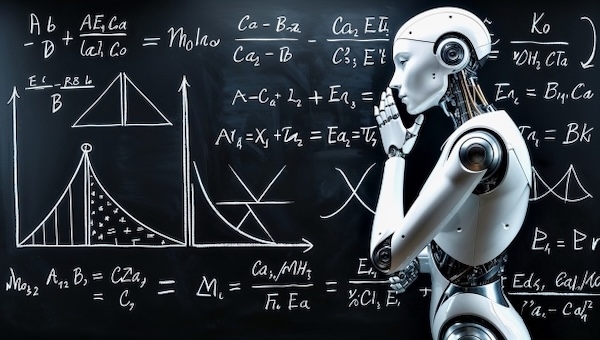
Don’t ask me! Instead, I asked AI itself for you by interviewing a ChatGPT. A ChatGPT, or just chatbot, is a computer program that uses large language models to produce human-like text in conversation either through text or voice. It can answer questions, provide information, or perform tasks by interacting with users in natural language
A: “AI feels ‘so freaking smart’ because it combines massive data, advanced algorithms, and lightning-fast processing to mimic certain aspects of human intelligence. AI can analyze millions of examples (images, texts, sounds) and detect patterns humans might miss. It processes information in milliseconds, far faster than human brains. AI doesn’t forget—it can store and recall vast amounts of data instantly. Through machine learning, AI improves over time by adjusting its models based on feedback.”
But Here’s the Catch. AI isn’t ‘smart’ in the human sense. It doesn’t understand meaning, emotions, or context the way people do. It’s only as good as the data and design behind it. If the data is biased or incomplete, AI can make flawed decisions. AI lacks creativity and values, it can generate ideas but doesn’t have purpose or wisdom. One type of AI can be trained for specific tasks so that it performs them with near-expert precision.
Q: How does AI see itself?
A: “AI doesn’t “see itself” in the way humans do. Self-perception requires consciousness, subjective experience, and emotions—things AI does not possess. Instead, AI has functional self-models: systems that track performance, monitor errors, and adjust behavior. So, AI “sees itself” as a set of metrics, probabilities, and feedback loops—not as a being with feelings or identity. AI doesn’t have subjective identity, no “I” in the human sense.”
AI monitors performance by tracking accuracy, efficiency, and error rates to evaluate its own outputs. AI adapts and adjusts models when feedback or new data show. AI can limit recognition and flag when it lacks data or confidence which is a practical form of self-assessment that some humans don’t have.
Q: Is AI a savior?
A: “AI is not the savior, it’s the ally. Human wisdom is irreplaceable: AI lacks values, empathy, and cultural grounding. A community’s true strength lies in its people, culture, and resilience. AI can amplify those strengths if applied with simplicity, ethics, and community-first design. There are risks of misuse as surveillance, bias, or over-commercialization could harm communities. It has infrastructure limits like availability of energy power, internet access, and governance systems. The must be strengthened and secured to support AI safely.”
Q: Could AI function as a savior for the Caribbean?
A: “AI can certainly feel like a potential savior for the Caribbean, but the truth is more nuanced: it’s not a savior on its own—it’s a strategic tool that, if guided by human leadership, culture, and ethics, can help the region leapfrog challenges and build resilience. AI could be transformative in the following areas:
Climate resilience: AI can forecast hurricanes, floods, and sargassum blooms with precision, giving communities more time to prepare.
Economic diversification: AI supports agriculture, fintech, eco-tourism, and creative industries, reducing dependence on tourism alone.
Healthcare access: AI diagnostics and telemedicine bridge gaps in medical expertise across islands.
Education & youth empowerment: AI tutors and adaptive learning platforms expand opportunities for students in remote areas.
Governance & transparency: AI dashboards track spending and project outcomes, building trust in political leadership.
Cultural preservation: AI can digitize Caribbean languages, oral traditions, and music, ensuring they thrive globally.
However, without identity protection and safeguards, AI could dilute Caribbean authenticity.”
Q: How can I thank an AI chatGPT for letting me do an interview with this chatbot?
A: “A thoughtful way to thank an AI for an interview is to frame it like you would with a human guest, acknowledging the exchange, highlighting what you gained, and expressing appreciation for the opportunity. Since AI doesn’t have feelings, the gratitude is more symbolic, but it still shows respect for the collaboration.
“Would you like me to help you craft a polished closing statement for your interview transcript or a short thank‑you note you can publish alongside it? Here it is: Many thanks to chatbot for joining me in this interview. The exchange was thought‑provoking and highlighted how AI can contribute meaningfully to human creativity and inquiry.”
I am the author of incisive articles, commentaries and interviews. Yet, in contrast, I also write fictional stories about fictitious people. I know the difference between both worlds and if you ask me...
We all want a stronger, safer, more prosperous Caribbean. Innovation isn’t a luxury — it’s how we get there. We should not just talk about change but rather lead it. A problem may be that we’ve been b...
The pursuit of money and power is harmless until it becomes compulsive. It becomes dangerous the moment they stop being tools and start becoming narcotics. Then it behaves like any other addiction: it...
Looking at encouraging stabilizing statistics is like looking through the glass window of the oven when baking a soufflé. It may be holding, but with a little breeze it will still go puffffff and fall...
Large-scale conferences have been around for quite a while now. Because of their scale, these events leave little room for meaningful networking opportunities, tailored experiences, and learnings that...