



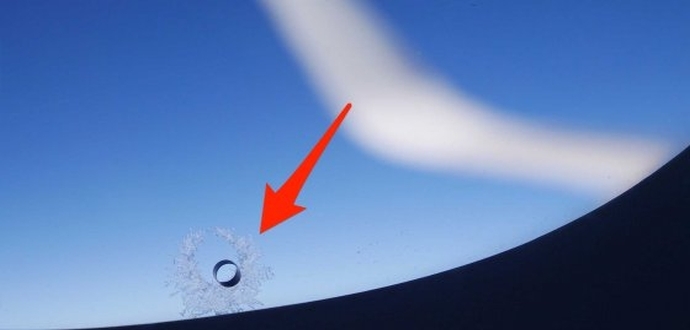
Having a hole anywhere on a plane seems a terrible idea, so why there is a tiny gap in the windows? The experts explain the crucial role they play
If you’ve ever stared out the window as your plane takes off, you will have seen a tiny hole in your window.
At first, it may seem like a weird addition, especially in something that’s carrying a lot of people at a great height, but they’re there for a very important reason: to stop the cabin from depressurizing.
Cruising at 10,600 meters (35,000 feet), the pressure is around 1.5 kilograms (3.3 pounds) per square inch. This is too low for the human body to stay conscious, so the pressure is artificially maintained at around 3.5 kilograms (8 pounds) per square inch. But of course, if you increase pressure inside, the structure has to be strong to hold the difference between the external pressure and internal pressure.
The difference between the two puts physical stress on the windows – made up of three panes of glass.
There’s a small air gap in between the middle and outer panes and the hole is actually in the middle pane.
If you ever wondered what it’s called – it’s a “breather” or “bleed hole – and it balances the pressure between the cabin and the air gap.
The outer pane takes the pressure, whereas the middle pane acts as a fail-safe just in case that trusty outer pane fails. Perish the thought.
The hole has another role though – releasing moisture from the gap preventing the little windows from fogging or frosting over.
So next time you see the tiny fracture like lines rather than a not so lovely cloudy window, you know why.
The International Aircraft Dealers Association (IADA) has released its 2026-2027 Current Market Portrait & Forecast, offering an in-depth analysis of the global preowned business av...
PAL-V has signed a Memorandum of Understanding with AVION, a specialist in advanced flight training devices, and FLYVE, a developer of FlyDrive ecosystems for professional and government operator...
A new travel industry coalition is urging EU policymakers to adopt a balanced and proportionate approach to biometric travel, ensuring passengers can benefit from secure and seamless journeys while ma...
Skandia’s King Air 200/300 soundproofing kit has received final approval from Brazil’s ANAC, opening the door for wider adoption among operators across the country. The certifica...

