



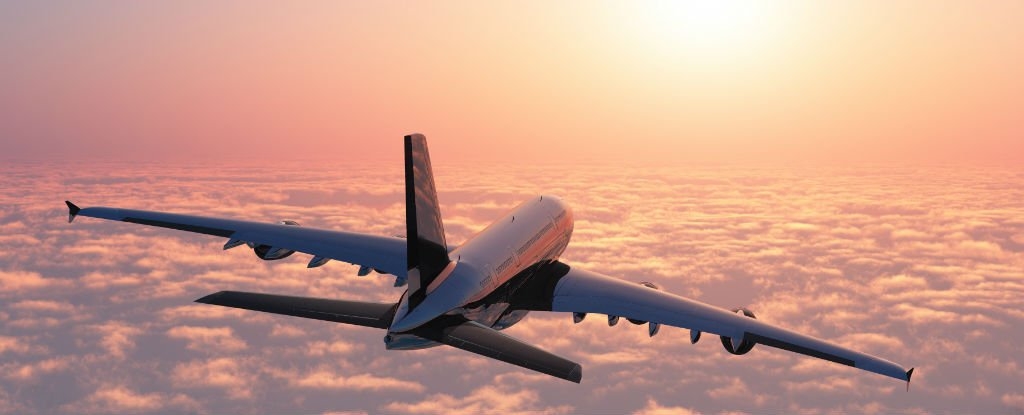
Hydrogen fuel cells - an ultra-clean energy source - offer a lot of potential for powering the transportation of the future, but there are significant hurdles to overcome: price, size, and supply, to name just three. Now UK budget airline EasyJet thinks it might have found a way to incorporate hydrogen fuel cells into its planes in a way that's safe and cost-effective.
While you'd struggle to find a hydrogen fuel cell refuelling station on your daily commute, these devices can be relatively easily supplied to airports, and EasyJet wants to use them on a limited scale to begin with - during the time that the aircraft are taxiing. That means while you're trundling from the gate to the runway, your plane won't be emitting any harmful carbon emissions, and will be a whole lot quieter.
The switch is likely to be cheaper for airlines too. A recent study commissioned by technology firms Safran and Honeywell found that fuel consumption could be cut by 51 percent while planes were on the tarmac if they adopted the use of an auxiliary electric power unit. EasyJet's head of engineering, Ian Davies, says hydrogen fuel cells could be used to power this electric system, with no carbon emissions released before take-off and after landing.
"The hybrid plane concept we are announcing today is both a vision of the future and a challenge to our partners and suppliers to continue to push the boundaries towards reducing our carbon emissions," he said.
The plans are still at an early stage, and there's no telling if they'll actually get off the ground (sorry), but EasyJet says the cells would work in tandem with batteries collecting energy from solar panels and the kinetic energy recouped from braking to get its planes from A to B. Fresh, clean water would be the only waste product, which could then be used to refill the water system on board the aircraft. A pilot scheme is planned for later this year, according to the company, although it might not be fully operational until 2018.
We've been waiting for hydrogen fuel to take off for some time now. There's an abundance of the element available, but getting it into a cell form that can power cars (and planes) remains a complicated process - one that often produces greenhouse gases, so defeats the purpose a little - and delivery and infrastructure remains a problem too. However, once those issues can be overcome, we'd be dealing with a powerful, zero-emission energy source ready for the future.
EasyJet says its fleet of planes spend an average of 20 minutes per flight taxiing - that adds up to 6.4 million km (4 million miles) covered every year, or enough to get you to the Moon and back eight times. The hybrid plane concept unveiled by the airline has been developed in partnership with engineering students at Cranfield University in the UK.
Embraer has delivered the first E175 fitted with next-generation RECARO passenger seats to American Airlines, marking another step in the ongoing modernization of one of the world's most successfu...
The U.S. Federal Aviation Administration has certified the Boeing 737-10, the newest and largest member of the 737 MAX family, paving the way for Boeing [NYSE: BA] to begin customer deliveri...
Velocity Maintenance Solutions, an FAA-certified provider of maintenance, repair and overhaul services, has announced a significant expansion of its facilities at Wilmington Airport (ILG) in Delaware,...
Samson Sky has enlisted renowned Italian automotive designer Luigi Memola to develop the interior design of its Switchblade Flying Car, bringing world-class automotive styling expertise to the roadabl...

