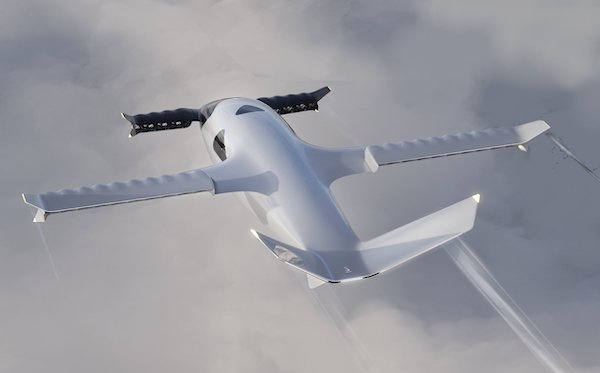
Welcome to Sirius Aviation AG, a trailblazer in the aerospace sector, dedicated to revolutionizing air travel with their century-refined flagship creation, the sleek Sirius Jet, the first hydrogen-powered VTOL aircraft (Vertical Take-Off and Landing). Sirius designed the two zero-emission jet models in collaboration with BMW’s Designworks innovation studio and the ‘Formula 1’ motorsport company Sauber Group.
The Sirius Business Jet, carrying a pilot and up to three passengers and tailored to private jet needs, will fly up to 1,851 km (1,150 mi) at speeds up to 520 km/h (323 mph). The Sirius Millennial Jet, accommodating a pilot and up to five passengers and crafted for commercial operations, similar to an air taxi, will fly up to 1,046 km (650 miles). Compare that with some of the eVTOL aircraft which are currently developed that have a radius between 241 and 800 km (150 and 500 mi) at speeds between 330 and 450 km/h (205 and 280 mph).
Some distance examples in Europe: London-Rome is 1,433 km (890 mi). London-Paris 344 km (214 mi). In the USA: New York-Miami 1,091.65 mi (1,756.84 km). Washington DC-Chicago 594.33 mi (956.48 km).
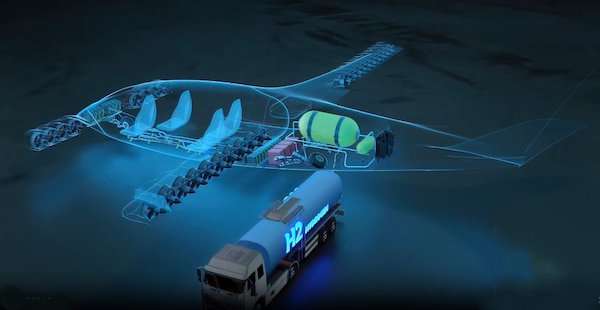
The difference between the two Sirius models is that the Millennium has less room for hydrogen tanks as it takes 2 more passengers. Therefore, the range is less, yet the performance figures are the same. Both versions feature a pressurized cabin and will be able to fly at altitudes of up to 30,000 feet at a cruise speed of 520 km/h (323 mph). Considering the range, a Sirius can drop off passengers, pick up new ones, fly to the next destination and do such several times. A mobile fueling truck can pump up hydrogen in a relatively short time.
The energy density per unit of hydrogen is three times that of conventional jet fuel and more than a hundred times that of lithium-ion batteries. Compared to batteries, hydrogen-electric systems can increase flight durations by several orders of magnitude. Plus, the weight of batteries limits the range of an eVTOL. Seldom mentioned are the emissions behind the energy produced by megawatt eVTOL battery chargers. Hydrogen is the most abundant element on the planet and emits only water, vapor, but no pollutants.
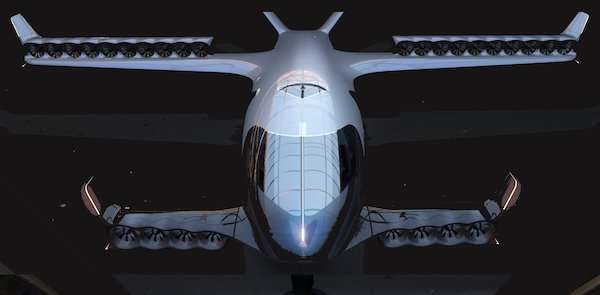
This high-performance, zero-emission VTOL jet, powered by a groundbreaking hydrogen-electric propulsion system comprising of 28 electric ducted fans, will combine the aerodynamics of a jet with the versatility of a plane or helicopter. The craft will be very quiet; less than 60 decibels at a distance of 100 meters/yards. That is about the sound of a dishwashing machine. No problem for operations in populated regions where noise pollution is a worry. The aircraft will be equipped with an airframe parachute system.
Sirius Aviation AG is a Swiss company. Swiss quality - “Nomen est Omen”. Sirius’ visionary objective is to guide the aerospace industry into a sustainable future by harnessing hydrogen as a clean fuel source. The company is committed to groundbreaking eco-friendly innovation, sustainability, unmatched safety, efficiency, and cost-effectiveness, ensuring unmatched flight safety, and upholding the highest standards of Swiss quality.
For years, Switzerland has been one of the most innovative countries in the world with a reputation for trusted and cutting-edge technology and its highly sophisticated business environment. This, combined with an environment conducive to investing on research and development and the protection of intellectual property, ensures a steady pipeline of new products coming to market.
The initial certification process with the FAA for the Sirius aircraft has already started. Demonstration flights of the Sirius Jets are scheduled for 2025. Full certification, serial manufacturing setup will follow, and commercial deliveries of the first 50 business jets to clients in the USA, EU, Gulf Countries and Asia are planned for 2028. Sirius offers a green pathway into the future of aviation.
The synthesizer turned a single musician into an orchestra. AI turns a single thinker into a team. The synthesizer did not replace the orchestra. It gave a single musician the power of many by using t...
Don’t ask me! Instead, I asked AI itself for you by interviewing a ChatGPT. A ChatGPT, or just chatbot, is a computer program that uses large language models to produce human-like text in conversation...
The stakeholders in the tourism and hospitality industry may have to do some rethinking. AI may significantly change the way tourists look for a destination and which hotel to choose. Tourists m...
The history of the Arawak people is significant, as they were among the first indigenous groups to encounter Columbus. They established a robust agrarian society rooted in communal living in the Carib...
Businesses don’t need people who know what to do when there isn't a dilemma or problem. Every generation inherits problems that the previous generation did not solve. The industry doesn't need people...